Save 40–60% on Meals Using Iceland Supermarkets and Hostel Kitchens
Save 40–60% on Meals Using Iceland Supermarkets and Hostel Kitchens
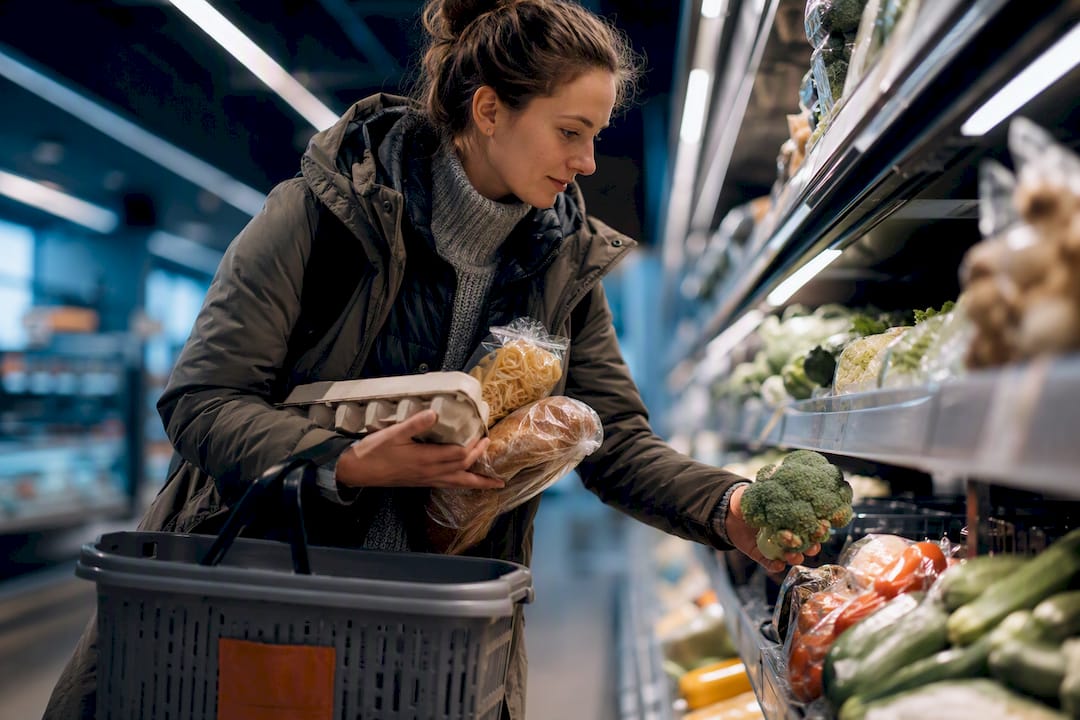
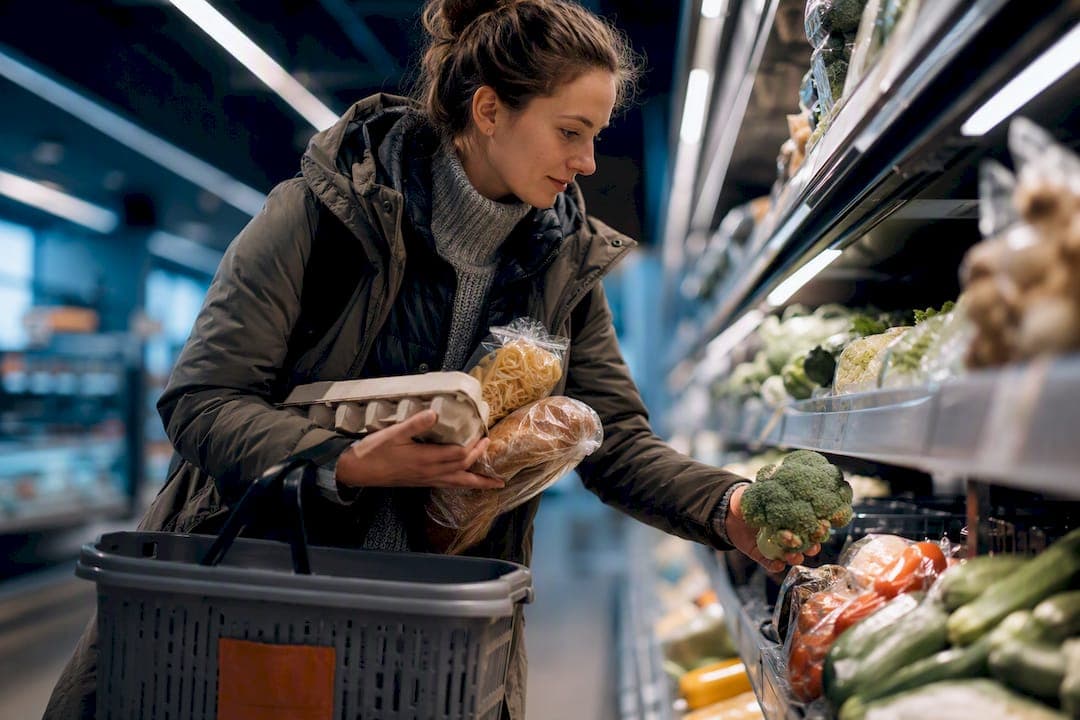
Shop at Prís or Bónus first, Krónan or Nettó second, and treat gas-station shops as an emergency-only last resort. Self-catering from these budget chains, instead of eating out, cuts daily food costs by roughly 40 to 60 percent. Stock up before long rural stretches, and remember that wine and spirits come only from Vínbúðin, the state alcohol monopoly, which keeps far shorter hours than any supermarket.
TL;DR:
- Prís offers the lowest prices on Icelandic groceries but has limited locations mostly around Reykjavík, making it a less practical choice outside urban areas.
- Bónus and Nettó provide the best national coverage and reliably low prices, especially if you shop early in the day or in larger towns.
- Krónan is worth the extra cost for organic produce, later store hours, and delivery options, particularly for health-conscious travelers who arrive after regular discount chain hours.
- Avoid gas stations and Vínbúðin stores unless out of options, as they have significantly higher prices or limited hours, especially in rural or remote locations.
- Self-catering can cut daily food costs by 40 to 60 percent, with strategic shopping, planning, and shared hostel kitchens maximizing savings on Iceland’s high food prices.
Table of Contents
- Iceland Supermarket Guide: Fast Tips Before You Shop
- Which Icelandic Supermarkets Are Cheapest?
- Which Budget Supermarkets Save the Most Money?
- Is Krónan Worth the Extra Cost?
- When Should You Shop at Hagkaup?
- Should You Buy Groceries at Gas Stations, and How Does Vínbúðin Work?
- How Much Can You Save by Grocery Shopping in Iceland?
- How Do You Plan Grocery Stops on the Ring Road?
- What Should You Buy and What Should You Skip?
- Making the Most of a Hostel Kitchen on the Road
- Why Planning Your Grocery Stops Changes the Whole Trip
- Where to Stay When You’re Self-Catering Your Way Around Iceland
- Where to Check Current Prices and Store Hours
- Sources
- FAQ
Iceland Supermarket Guide: Fast Tips Before You Shop
Planning your grocery runs before you land saves both money and time on the road. Iceland’s supermarket landscape is small and predictable once you know the hierarchy, so a few decisions made in advance go a long way.
- Default to Prís if there’s one on your route; otherwise pick Bónus, Nettó, or Krónan, in roughly that order of price.
- Stock up heavily in larger towns before rural legs. Selfoss, Akureyri, and Egilsstaðir are your safest bets.
- Check opening hours before you drive. Many rural branches close earlier than city stores, and Sunday hours shrink further.
- Pack a soft cooler bag. It keeps dairy, meat, and skyr fresh between shopping stops and long drives.
- Watch the sell-by discount shelf. Bakery items and fresh meat nearing their date are often marked down 30 to 50 percent.
- Buy wine or spirits at Vínbúðin, not the supermarket. Beer and soft drinks are fine at any regular grocery store.
- Bring a card. Nearly every till in Iceland, including tiny rural shops, takes contactless payment without a fuss.
Which Icelandic Supermarkets Are Cheapest?
Iceland’s grocery chains split into three clear tiers: discount, midrange, and premium, plus the convenience and alcohol outlets that sit outside the normal price ladder entirely.
- Prís: the cheapest chain in the country, per ASÍ price monitoring, but with a short list of locations concentrated around the capital area.
- Bónus: the yellow pig logo you’ll recognize everywhere. Wide national coverage, reliably low prices, and shorter opening hours than most rivals.
- Nettó: a close price match to Bónus, often with slightly longer hours and a marginally different product mix.
- Krónan: midrange pricing with noticeably better fresh produce, organic options, and longer hours at many branches.
- Hagkaup: the premium end, stocking imported specialty items, ready meals, and a wider international selection at a higher price.
- 10-11: a convenience chain open late or around the clock in cities, priced well above every supermarket on this list.
- Vínbúðin: the only legal seller of wine and spirits, run by the state with limited hours and a limited store count outside Reykjavík.
For coverage, Bónus and Nettó dominate outside the capital, while Prís stays mostly urban and Hagkaup clusters in bigger towns. If you’re chasing rock-bottom prices, plan around Prís and Bónus. If you need organic produce or a later closing time, Krónan earns the small premium. If you’re desperate at 11 p.m. in a small village, 10-11 is what’s open, and you’ll pay for that convenience.
Which Budget Supermarkets Save the Most Money?
Bónus, Prís, and Nettó do the heavy lifting for anyone trying to keep grocery spending under control, but they each behave a little differently on the ground.
- Prís consistently posts the lowest basket total in Iceland. A recent ASÍ survey found it cheapest for 246 of 248 compared products against other major chains. The catch is location: Prís has a limited footprint, mostly around Reykjavík and Akranes, so it’s worth a detour only if it’s genuinely on your route.
- Bónus is the workhorse for most road-trippers. It has the widest national spread of any discount chain, meaning you can usually count on finding one in mid-size towns along the Ring Road. The trade-off is hours: many Bónus locations close by 6 or 7 p.m. and keep shorter Sunday hours, so don’t plan to shop late.
- Nettó runs close behind Bónus on price and often stays open later, sometimes past 9 p.m. in larger branches. Selection skews slightly more toward household basics and less toward Icelandic specialty items, but for a quick, affordable stop it does the job just as well.
The practical tactic here is simple: hit Bónus or Nettó in the morning or early afternoon when you’re passing through a town of any size, and treat Prís as a bonus stop rather than a destination.
Is Krónan Worth the Extra Cost?
Krónan sits a notch above the discount chains on price, and for certain travelers, that gap is worth paying. The produce section is noticeably stronger, with more organic fruit and vegetables than you’ll typically find at Bónus or Nettó, and the prepared-food case gives you a faster dinner option after a long driving day.
- Many Krónan branches stay open later than Bónus, some past 10 p.m. in bigger towns.
- Several locations offer delivery or click-and-collect pickup, useful if you’re based somewhere for a few nights.
- Krónan holds the Nordic Swan Ecolabel, a sustainability credential that shows up in better waste separation and more visible organic labeling in-store.
If you care about eating organic or need a store that’s still open when you roll into town at 8 p.m., Krónan is the better call over a Bónus that’s already locked up.
Pro Tip: Krónan’s self-checkout lanes tend to move faster than Bónus during peak evening hours, which matters more than it sounds like when you’re tired and just want dinner sorted.
When Should You Shop at Hagkaup?
Hagkaup is Iceland’s answer to a full-service supermarket, and it’s the place to go when Bónus or Krónan simply doesn’t stock what you need. The selection includes imported specialty ingredients, a genuinely useful prepared-food counter, and international brands that discount chains skip entirely.
- Look for gluten-free and specialty dietary sections that are more developed here than at most budget chains.
- The ready-meal and hot-food counters are worth it on a night when cooking in a shared kitchen isn’t practical.
- Prices run noticeably higher across the board, so treat it as a targeted stop, not your default grocery run.
- Hagkaup locations cluster in Reykjavík, Akureyri, and a handful of larger towns, so don’t expect one on a quiet stretch of coast.
A Hagkaup visit makes sense when you need a specific imported ingredient, a quick hot meal, or something for a dietary restriction you couldn’t find elsewhere.
Should You Buy Groceries at Gas Stations, and How Does Vínbúðin Work?
Treat 10-11 and every petrol-station shop in Iceland as a backup plan, not a shopping strategy. These stores routinely charge 30 to 50 percent more per item than a regular supermarket, and the selection is thin outside of snacks and basics.
- Use 10-11 or a gas station only when you’ve genuinely run out of options, not as a shortcut.
- Vínbúðin is the sole legal retailer of wine and spirits in Iceland; supermarkets sell only low-strength beer and soft drinks.
- Vínbúðin locations are sparse outside major towns and typically close earlier than supermarkets, often by 6 p.m. on weekdays and even earlier on Saturdays.
- Plan your alcohol purchase for a bigger town during the day. Don’t count on finding a Vínbúðin open in a small village after dinner.
If you know you’ll want wine with a meal in a remote spot, buy it two towns earlier, not the night you need it.
How Much Can You Save by Grocery Shopping in Iceland?
Iceland’s grocery prices sit far above the European norm, which is exactly why self-catering pays off so heavily here. Reporting from RÚV puts overall grocery prices at roughly 55 percent above the EU average, with dairy running markedly higher and meat similarly much higher than the EU benchmark.
Travelers who self-cater using budget chains instead of eating at restaurants typically cut daily food spending by 40 to 60 percent, according to local travel guides.
That gap is the entire argument for planning your grocery stops rather than winging it. A few tactics stretch that savings further:
- Buy Icelandic staples like skyr, rúgbrauð (rye bread), and local eggs, which stay closer to normal pricing than imported goods.
- Check the sell-by discount shelf at every stop; markdowns of 30 to 50 percent on near-expiry items are common.
- If you have a Costco membership and a longer stay, a single bulk run for pasta, rice, and cooking oil can meaningfully lower your per-day cost.
- Use a hostel or guesthouse kitchen whenever one is available so groceries actually replace restaurant meals instead of supplementing them.
The Competition Authority’s own report on grocery pricing trends backs the same conclusion RÚV reported: Iceland’s food costs have climbed faster than in neighboring Nordic countries since 2020, which makes the self-catering math even more favorable this year than it was a few years ago.
How Do You Plan Grocery Stops on the Ring Road?
Rural stretches of the Ring Road can run past 100 kilometers without a single supermarket, so treat every town with a Bónus or Nettó as a checkpoint, not an afterthought.
- Stock up heavily in Selfoss before heading east; it’s the last major supermarket cluster before long stretches toward the south coast.
- Use Akureyri as your northern provisioning hub if you’re circling the island; it has the fullest range of chains outside the capital.
- Treat Egilsstaðir, Höfn, and Vík as smaller but reliable stock-up points on the eastern and southern legs.
- Check a supermarket finder tool before you leave each town to confirm hours, especially on Sundays or during shoulder season when many stores trim their schedules.
- Pack a cooler bag and freeze what you can up front; a frozen block of meat or fish holds its temperature far longer in transit than fresh.
Sunday closures catch more travelers off guard than any other single mistake in Iceland grocery planning.
What Should You Buy and What Should You Skip?
Some products are genuinely good value in Iceland; others are marked up so heavily that buying them feels like a mistake in hindsight.
- Buy: skyr, rúgbrauð, frozen fish, local eggs, pasta and rice, and anything on the sell-by discount shelf.
- Skip or limit: imported fresh fruit and vegetables, specialty imported cheeses, and premium imported snack brands, all of which carry steep markups.
- Watch for: ready-meal bargains near closing time, when some branches discount prepared food that won’t keep overnight.
Pro Tip: Rúgbrauð and skyr together make a genuinely filling breakfast for under the price of a single café pastry, and both travel well in a cooler bag for two or three days.
Making the Most of a Hostel Kitchen on the Road
A shared kitchen turns every grocery run into real savings instead of a partial one. Split a big Bónus haul with roommates in a communal kitchen and everyone’s per-meal cost drops, especially for staples like pasta, eggs, and bread that go further shared.
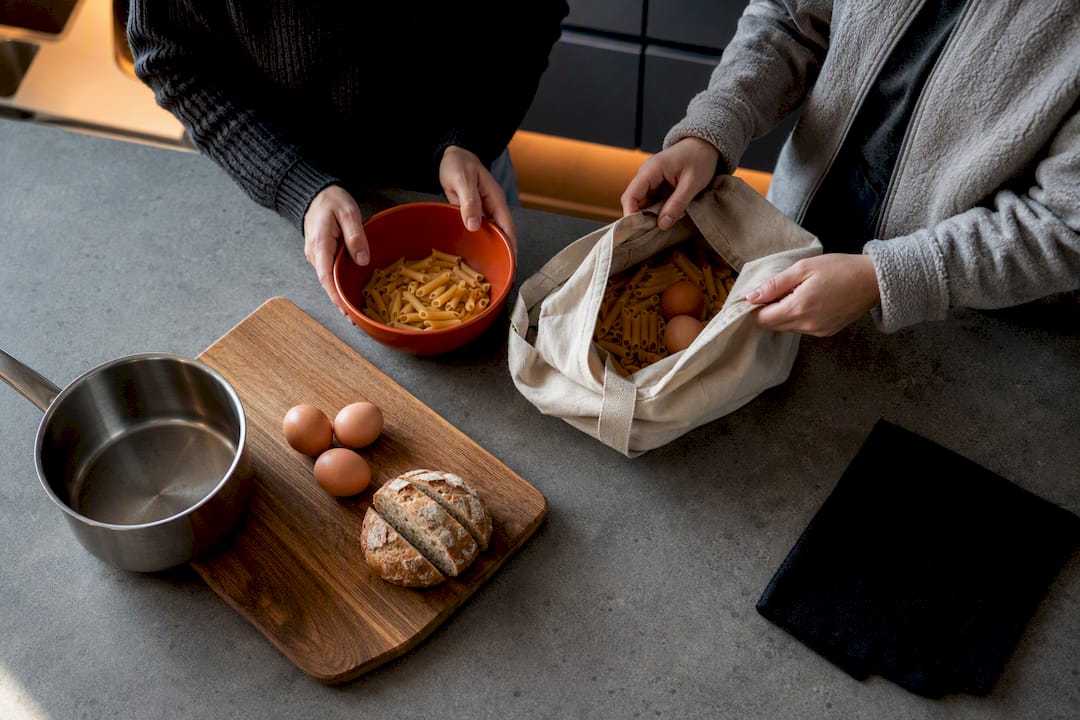
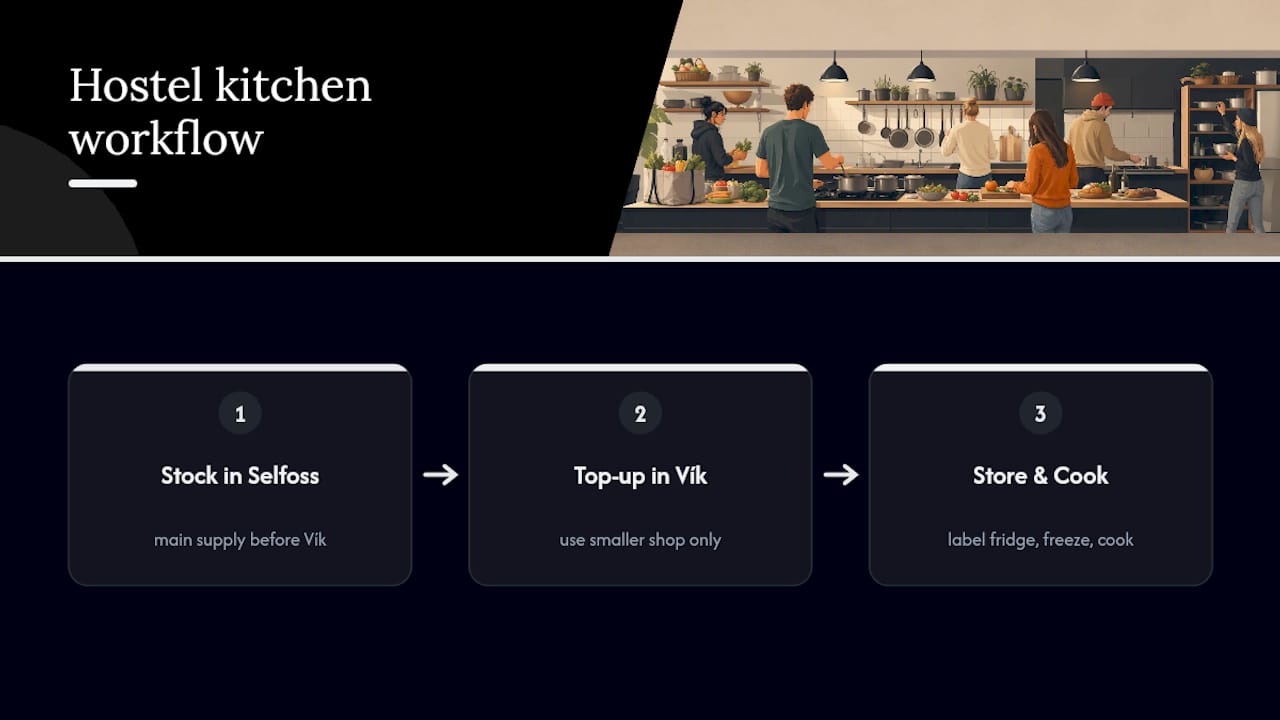
Keep perishables in a labeled bag in the fridge, and freeze anything you won’t use within two days before your next drive. If you’re basing yourself near Vík, stock up in Selfoss on the way down and treat Vík’s smaller shop as a top-up stop rather than your main supply run. A budget-focused approach to Iceland travel works best when your accommodation actually lets you cook, not just store snacks.
Why Planning Your Grocery Stops Changes the Whole Trip
Most travelers underestimate how much a bad grocery stop costs them, not in money but in time and mood. Rolling into a village at 9 p.m. with nothing open except an overpriced gas-station shelf is a rough way to end a long driving day, and it’s entirely avoidable with a little route awareness.
The bigger shift happens when you pair that planning with a kitchen you can actually use. A shared kitchen setup doesn’t just save money on paper: it changes how you eat on the road, turning a Bónus haul into three real meals instead of a bag of snacks eaten in the car. That’s the difference between grinding through a trip and actually enjoying it.
— Siggi
Where to Stay When You’re Self-Catering Your Way Around Iceland
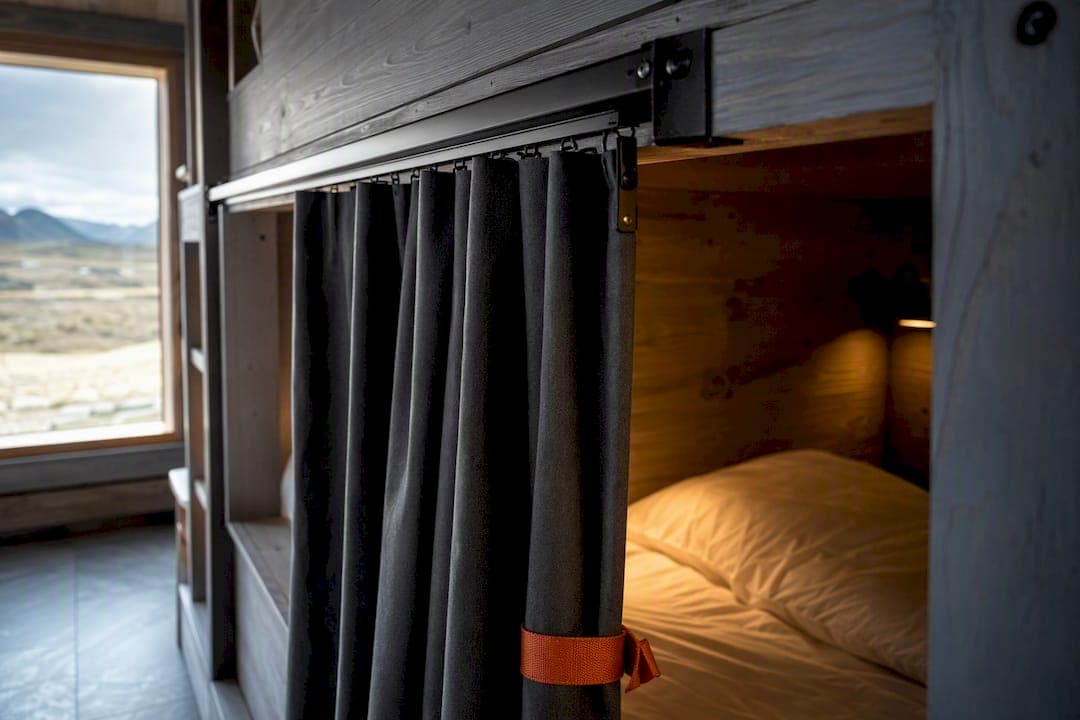
Fox Hostel offers self-caterers a full communal kitchen inside a converted barn in South Iceland. Solo travelers book a single bed in the shared dormitories, while couples, families, or small groups can buy out an entire private dormitory for the same social base without giving up privacy.
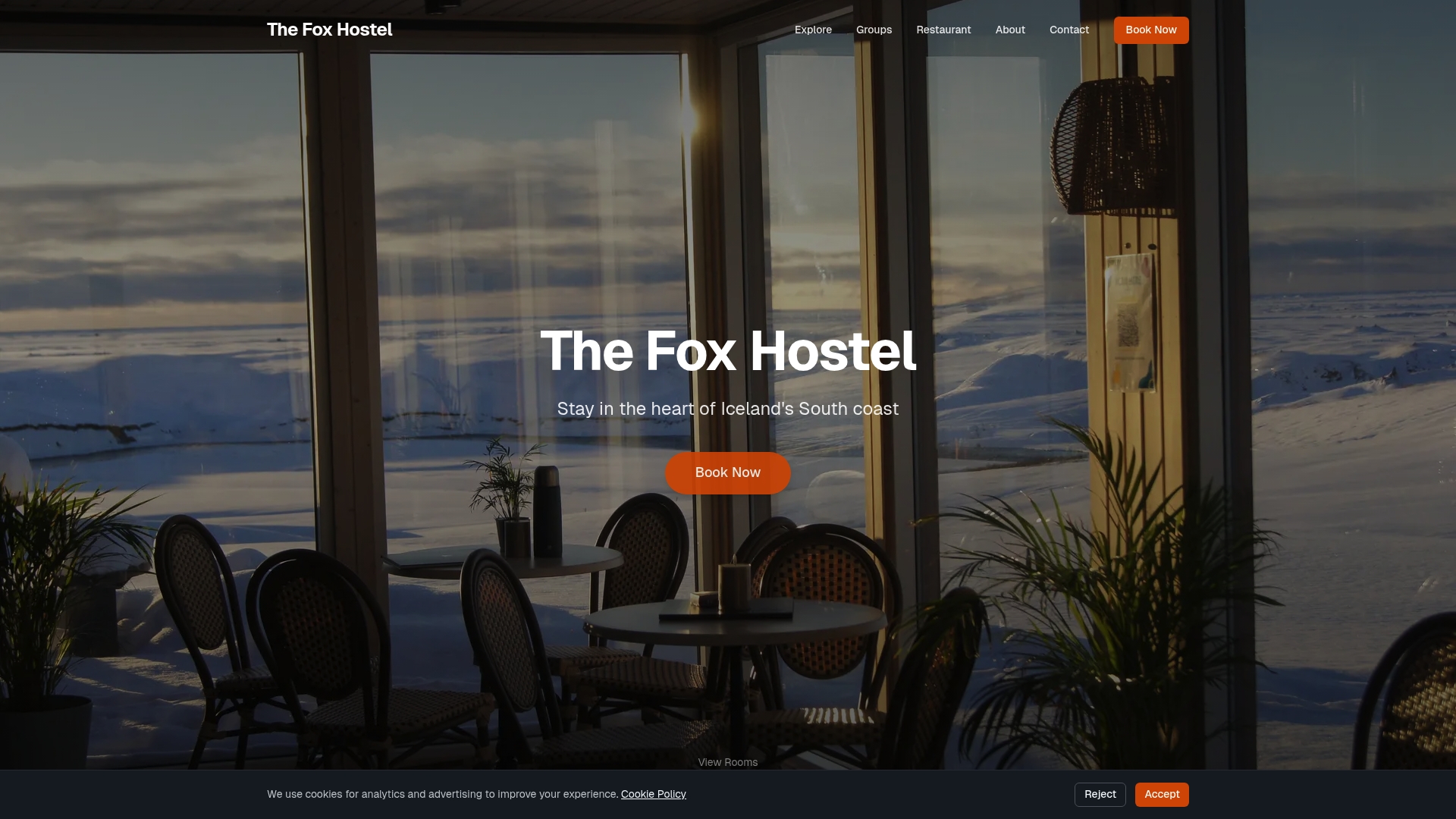
That kitchen access is where the savings from this guide actually land. Stock up in Selfoss or Vík on your way through, then cook Bónus staples for a whole group instead of splitting restaurant bills across the South Coast. Traveling with a crew? The group bookings page makes it simple to lock in a room buyout and split costs across everyone. Check availability and book your dates directly on the rooms page before your South Coast leg fills up.
Where to Check Current Prices and Store Hours
- ASÍ price monitoring: compares product prices across chains so you can confirm which store is cheapest right now, via the Competition Authority’s own reporting.
- Wayfarer’s supermarket finder: maps store locations and lists current opening hours along your route.
- Local travel guides: cross-check chain-specific tips and seasonal hour changes before you commit to a route.
Sources
- Grocery prices 55% higher in Iceland than EU - RÚV.is
- Iceland Supermarkets & Grocery Stores: The Budget — The Icelandic Guide
- Prís cheapest for 246 of 248 compared products - Daily Northern
FAQ
Is Groceries in Iceland More Expensive Than in Ireland or the UK?
Yes. Iceland’s grocery prices run roughly 55 percent above the EU average, with dairy and meat among the steepest categories. Shopping at Bónus, Prís, or Nettó instead of premium chains narrows that gap considerably.
What Are the Best Things to Buy at an Icelandic Supermarket?
Skyr, rúgbrauð, frozen fish, and local eggs offer the best value relative to imported goods. Sell-by discount shelves, often marked down 30 to 50 percent, are worth checking at every stop for near-expiry bargains.
Which Supermarket Chain Should I Choose First?
Prioritize Prís if one is on your route, since ASÍ price surveys found it cheapest for 246 of 248 compared products. Bónus or Nettó are the reliable second choice with far wider coverage across the country.
Is Iceland Supermarket Shopping Expensive Overall?
Compared with the rest of Europe, yes, but self-catering still beats eating out by a wide margin. Guides to estimate travelers save 40 to 60 percent on daily food costs by cooking with supermarket groceries instead of dining at restaurants, and staying somewhere with kitchen access, like Fox Hostel, makes that saving easy to capture.
Can I Buy Wine or Beer at an Icelandic Supermarket?
You can buy low-strength beer and soft drinks at any regular supermarket. Wine and spirits are sold exclusively through Vínbúðin, the state-run alcohol monopoly, which keeps shorter hours and fewer locations than grocery stores.