Vík Weather by Month: What to Expect on Iceland's South Coast
Vík Weather by Month: What to Expect on Iceland’s South Coast

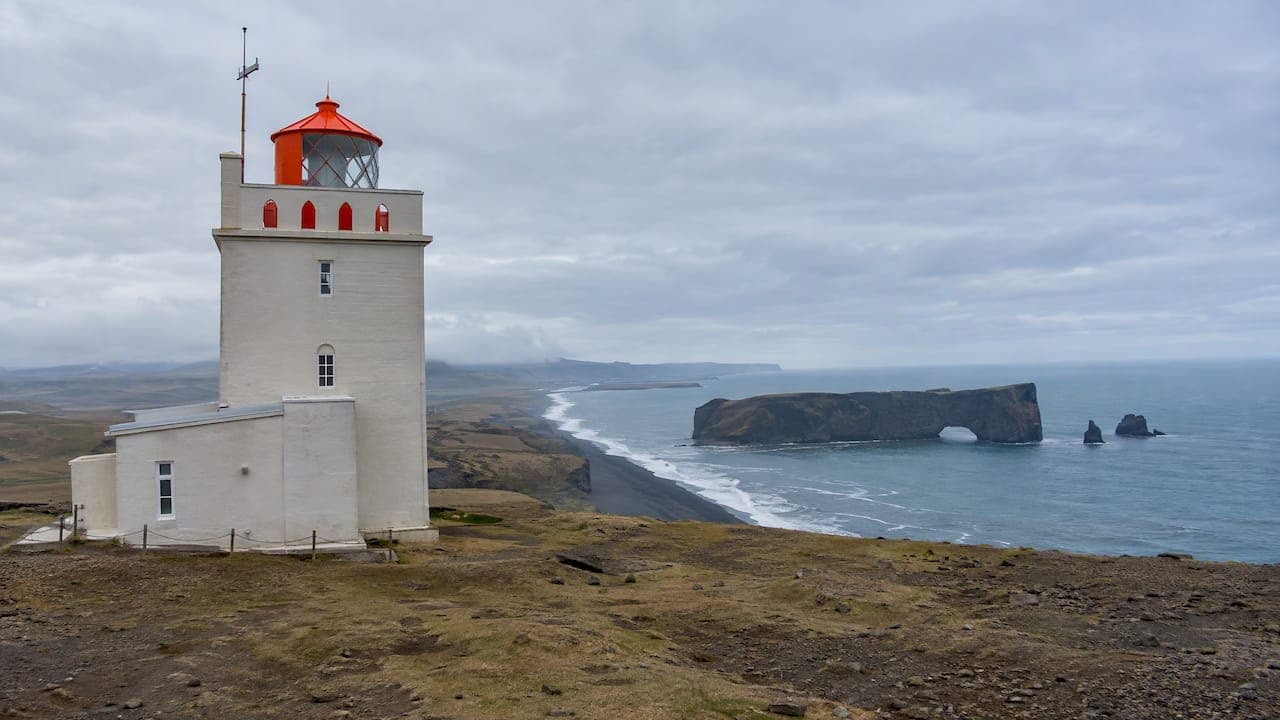
Vík í Mýrdal is mild for its latitude and very wet. Daytime highs run from about 39°F in February to about 54°F in August, rain falls on roughly half the days of the year, and the wind can change your plans in any month. This guide covers Vík, Iceland (not the village of Vik in Norway), month by month, with what each season means for driving, waterfalls, black sand beaches and the northern lights.
TL;DR
- Vík never gets hot. Average daytime highs stay between about 39°F (February) and 54°F (August).
- It is one of the wettest places in Iceland. The same source puts yearly precipitation near 108 inches, with June the driest month and February the wettest.
- Wind and road conditions matter more than the thermometer. Check road.is and Safetravel every day before you drive.
- Summer brings near-constant light. Winter brings only a few hours of daylight, but it is aurora season.
- Pack for four seasons in every month, and pack waterproof layers first.
Table of Contents
- Why Vík’s weather behaves the way it does
- Vík weather by month at a glance
- Winter: December to February
- Spring: March to May
- Summer: June to August
- Autumn: September to November
- Rain, wind and the numbers that matter more than temperature
- Driving in Vík’s weather, month by month
- What to pack, whatever the month
- Which month should you choose?
- Our view from the barn
- Stay close to the weather windows
- Frequently asked questions
- Sources
Why Vík’s weather behaves the way it does
Vík sits on the South Coast, where a branch of the Gulf Stream moderates the climate well beyond what the name “Iceland” suggests. The Icelandic Met Office describes the region’s winters as the mildest in the country, with typical south coast winter temperatures of roughly 0.7 to 1.6°C (about 33 to 35°F). The same report notes that the South Coast is also prone to storms, heavy rain and fast weather changes, especially in winter.
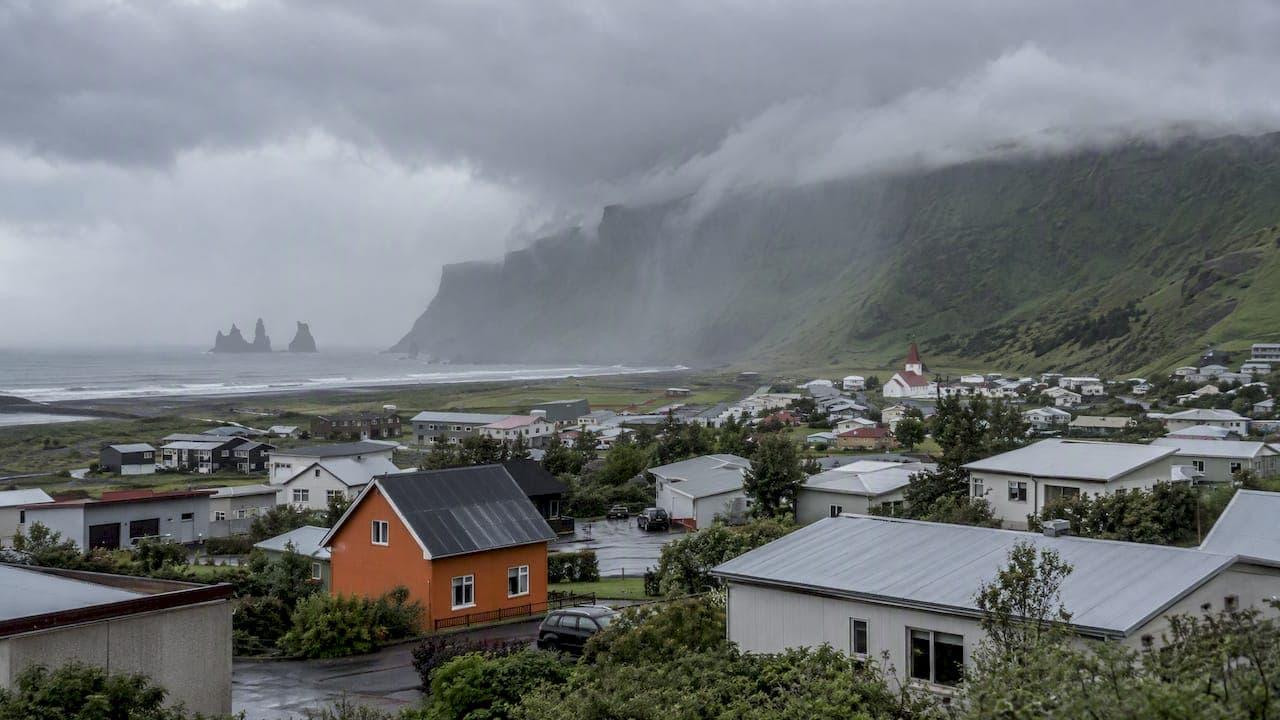
So the numbers look gentle, but the conditions are not. Moist Atlantic air meets the mountains behind Vík, and you get rain, mist and wind, often within the same hour. Visit Iceland’s advice is to pack for four seasons, keep your schedule flexible, and expect sudden changes.
Vík weather by month at a glance
Climate figures for a village this small are modeled or taken from nearby stations, so different websites give slightly different numbers. The highs below come from weather-and-climate.com. Treat them as a guide to the pattern, not a forecast.
| Month | Typical daytime high | What it feels like |
|---|---|---|
| January | 41°F | Dark, wet, often windy |
| February | 39°F | Coolest and wettest month in this dataset |
| March | 41°F | Winter conditions, days getting longer fast |
| April | 43°F | Changeable, snow possible, light returns |
| May | 46°F | Drier, long evenings begin |
| June | 50°F | Driest month, midnight sun |
| July | 52°F | Mild, bright, busy |
| August | 54°F | Warmest month, nights darken again |
| September | 50°F | Wetter, first aurora nights |
| October | 45°F | Stormy spells, strong aurora chances |
| November | 43°F | Short days, wind, rain |
| December | 41°F | Only a few hours of daylight |
Nighttime lows trail the highs by only a few degrees. Timeanddate’s averages show lows of 33 to 34°F from December to March and about 46°F in June, based on a nearby station. That narrow gap is why Vík rarely sees deep cold, and why a winter day can swing between drizzle and slush rather than hard frost.
Winter: December to February
Daytime highs sit around 39 to 41°F. That is not frigid by American standards, since it is similar to a cold, damp day in Seattle or Boston. What changes the experience is the combination of wind, rain and darkness.
Daylight is the main constraint. Visit Iceland notes that Reykjavík gets about 4 hours of daylight at the winter solstice, and Vík is at a similar latitude. Plan your sightseeing for the middle of the day, and keep a headlamp in your bag for walks that run late.
What winter gives you in return:
- Aurora chances. The aurora season officially runs from late August through late April, and the lights are most often seen between 10 pm and 1 am.
- Empty viewpoints. The beach at Reynisfjara and the waterfalls along the Ring Road are far quieter than in July.
- Ice and snow scenery. Waterfalls partly freeze, and the black sand shows off any dusting of snow.
The cost is that this is the wettest, windiest stretch of the year. The Icelandic Met Office says precipitation is greater in winter than in summer. Waterproof trousers, a proper shell and boots with real grip matter more than a heavy parka.
Spring: March to May
March is still winter in practice. Highs hover near 41°F, and snow and ice can close roads. April, at about 43°F, is the most unpredictable month. You can get sun, sleet and a gale in a single afternoon, and daylight is stretching quickly.
By May the highs reach about 46°F, and rain eases. Puffins start returning to the sea cliffs around this time of year, which is one reason photographers like late spring. Evenings get long, and the midnight sun begins in the middle of the month.
Spring is also when many visitors get caught out. Safetravel warns that winter conditions can occur in spring and autumn as well as winter. A bright morning in late April does not guarantee a clear road in the afternoon.
Summer: June to August
June is the driest month in this dataset, at about 5.3 inches of precipitation. July and August are the warmest, with highs of 52 and 54°F. In this climate, “warm” means a light jacket, and you will still want a rain shell.
Visit Iceland says the midnight sun lights the nights from mid-May to mid-July, and that many natural sights have no opening hours, so you can visit at night to avoid the crowds. Reykjavík gets about 21 hours of daylight at the summer solstice. If you plan to make an evening of it, see our guide to planning a midnight sun evening with exact dates. If constant light keeps you awake, these tips on sleeping during the midnight sun help.
Summer is also the most crowded season. The South Coast attractions fill up by midday, so early starts and late evenings work better than the middle of the day.
Autumn: September to November
September has highs near 50°F, but rain returns. The same data shows precipitation climbing steadily after August. The nights get properly dark again, which brings the aurora back into reach while the days are still long enough for a full itinerary. For many travelers, September is the sweet spot between summer crowds and winter darkness.

October (about 45°F) and November (about 43°F) are stormier. Daylight shrinks quickly, and wind becomes the biggest factor in how you plan. Strong autumn storms can close roads and make beaches dangerous.
If the lights are your main reason for coming, read our guide to northern lights from Vík, which covers spots 10 to 30 minutes away by car. A common mistake is relying on the Kp-index alone. Visit Iceland’s experts suggest checking the Bz value too: a negative or southward Bz improves your chances, but you still need darkness and clear skies.
Rain, wind and the numbers that matter more than temperature
Weather sites rank months by temperature, but in Vík the useful numbers are rain days and wind speed.
Rain. Annual precipitation here is among the highest in Iceland, around 108 inches according to weather-and-climate.com. Another dataset, from climate-data.org, gives a similar total of about 111 inches and shows 12 to 16 rainy days in every month. Expect rain in some form, whenever you come. The practical difference between months is how heavy it is, not whether it happens.
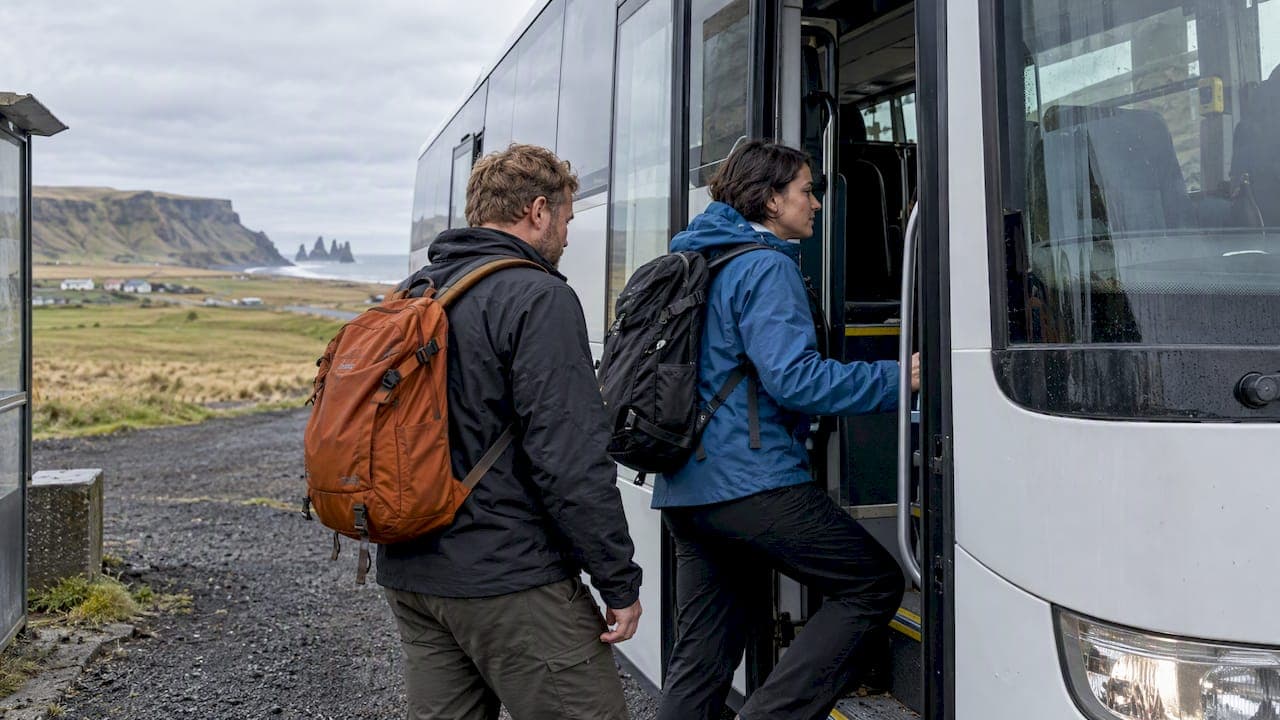
Wind. Safetravel advises checking wind speed and gusts, in meters per second, before every drive, and not only the temperature. Gusts can push a car off the road. On the South Coast the mountains channel the wind, and a rental car’s doors can be torn from your hands in a car park. Open them with a firm grip.
Sea. Reynisfjara and other black sand beaches have powerful waves that reach farther than they look. Stay well back from the surf in every season, and never turn your back on the water.

Driving in Vík’s weather, month by month
The same guidance applies year-round, with different risks by season:
- Check conditions daily. Safetravel recommends looking at road.is and Safetravel at least once a day. Roads can be closed or impassable even when your map app shows them as open.
- Call 1777 for road info. The Icelandic Road and Coastal Administration runs an information service on that number. Its published hours are 08:00 to 16:00 from May 1 to October 14, and 06:30 to 22:00 from October 15 to April 30.
- Slow down. Safety experts stress that a 4x4 does not remove the risk of skidding on ice. Adjusting your speed to the actual conditions matters more than the vehicle type.
- Stop and wait. If conditions become too severe, the recommended action is to pull over in a safe place and wait rather than push through.
- Turn on all the lights. Many rental cars use an automatic daytime light system, and Safetravel’s winter driving page tells drivers to walk around the car and confirm that every light is on. Rear lights matter in fog and rain, which is common near Vík.
If you need a base that cuts your daily driving, our guide to basing yourself near Vík explains how much time it saves along the South Coast.
What to pack, whatever the month
The packing list changes little between seasons. What changes is the weight of the layers.
- Waterproof shell and rain trousers. The most important items in every month.
- Warm mid-layers. Wool or fleece, so that you can add and remove them as the weather shifts.
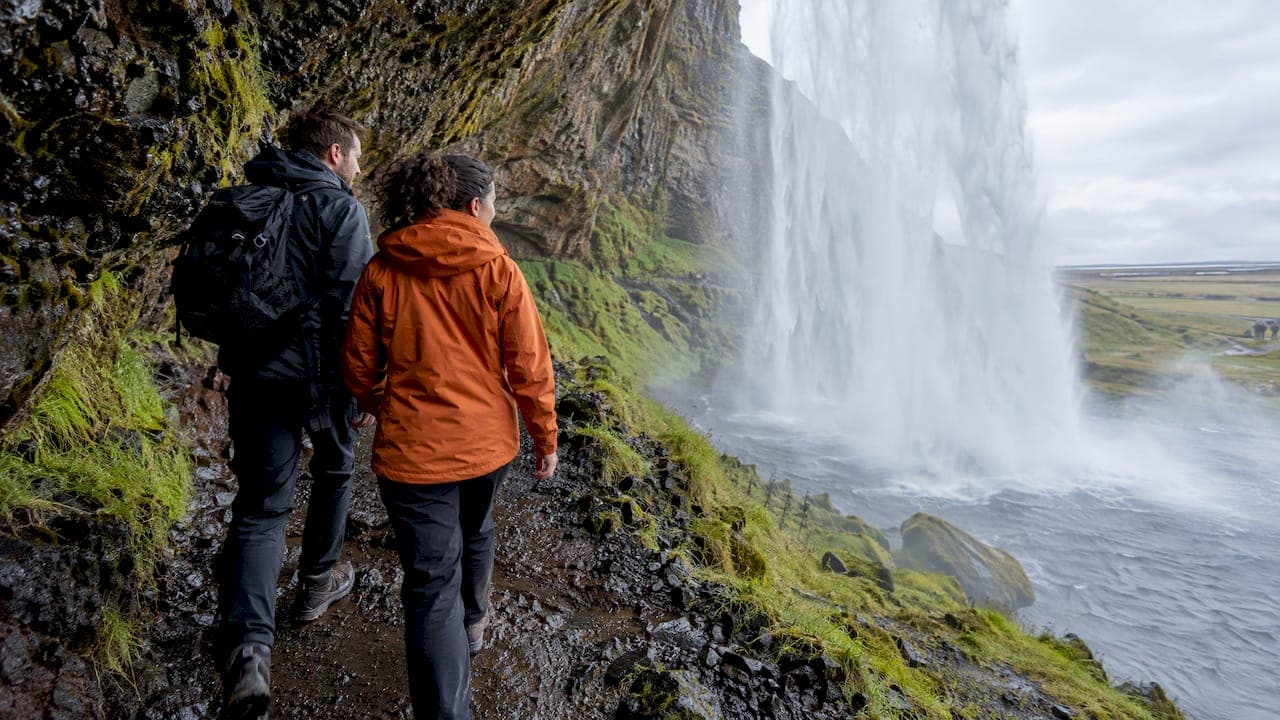
- Waterproof boots with grip. Wet rocks near waterfalls and icy paths in winter are common.
- Hat, gloves and a buff. Even in July, wind chill is real.
- Sleep mask. Useful from May to August.
- Headlamp. Useful from October to March.
- Swimsuit. Hot springs are comfortable in any weather, and rain does not matter once you are in the water.
Avoid cotton jeans as your main trousers. Once they are wet, they stay wet.
Which month should you choose?
There is no single best month. It depends on what you want from the trip.
| If you want | Aim for | Why |
|---|---|---|
| Long days and the driest weather | June | Driest month, midnight sun |
| The warmest temperatures | July or August | Highs of 52 to 54°F |
| Northern lights and daylight | Late September or early October | Dark nights, still usable days |
| Quiet and dramatic scenery | November to March | Few visitors, ice and snow, aurora |
| A balance of both | May | Drier, long evenings, fewer crowds |
Our article on the best time to visit Vík goes deeper on photographers, families and aurora chasers.
Our view from the barn
We run Fox Hostel in a renovated barn in the South Iceland countryside near Vík, so we watch this weather from the window every morning. Guests tend to ask about temperature. The better question is how much time you can plan to spend outside, and how flexible you can be.
Here is how we think about it:
- Build in slack. If you have only one day for a waterfall or a beach, you will probably get one clear hour and three wet ones. A second day gives you a second chance.
- Treat the morning check as part of the trip. Look at the forecast and road conditions over breakfast, then decide where to go. Plans made a week ahead rarely survive the wind.
- Use the bad hours well. A rainy afternoon is a good time for a hot meal and a chat with other travelers in the shared spaces. That is what the common areas are for.
- Stay close to what you came for. Short drives mean you can wait for a gap in the weather and go. Long drives make you commit before you know.
Most of the guests who have a great trip here are the ones who stopped fighting the weather and started working around it.
— Siggi
Stay close to the weather windows
When the forecast opens a gap, you want to be minutes from the coast, not an hour. Fox Hostel offers shared and private dormitories, and you can book individual beds or whole rooms. See the rooms page for options. Breakfast is served at the hostel, and Hrífunes Pizzeria is on site for a hot dinner when the rain settles in. Traveling with friends or a club? Our group bookings let you reserve rooms together. For something active on a wet day, there is also rafting.
Frequently asked questions
What is the worst month to visit Vík?
There is no objectively worst month, but November through February combine the least daylight with strong wind and rain. They suit travelers who value solitude and the northern lights over long sightseeing days. If you want easy driving and long days, choose May to September.
What is the rainiest month in Vík?
In the weather-and-climate.com data, February is the wettest, at about 12 inches of precipitation. Climate-data.org puts December highest, at about 12.2 inches. Both agree that winter is wetter and June is the driest month.
How much snow does Vík get?
Snow is possible from autumn into spring, but the coast is milder than inland Iceland, so much of the winter precipitation falls as rain or wet snow. Higher roads and the area around Mýrdalsjökull see more. Check Safetravel before you set off, because conditions can change within hours.
Is Vík warm enough for summer clothes?
Not really. July highs are about 52°F, and wind makes it feel colder. Bring layers and a waterproof shell even in midsummer.
When can I see the northern lights in Vík?
The season runs from late August to late April. You need dark, clear skies, so winter nights offer the most chances, and the midnight sun months do not.
Sources
- Weather-and-climate.com: Vík í Mýrdal climate
- Climate-data.org: Vík climate
- Timeanddate: Climate and weather averages in Vík í Mýrdal
- Icelandic Met Office: Climate report
- Icelandic Met Office: Icelandic climate
- Visit Iceland: Weather and climate in Iceland
- Visit Iceland: The auroras
- Visit Iceland: How to celebrate the midnight sun
- Safetravel: How to drive in Iceland
- Safetravel: Winter driving